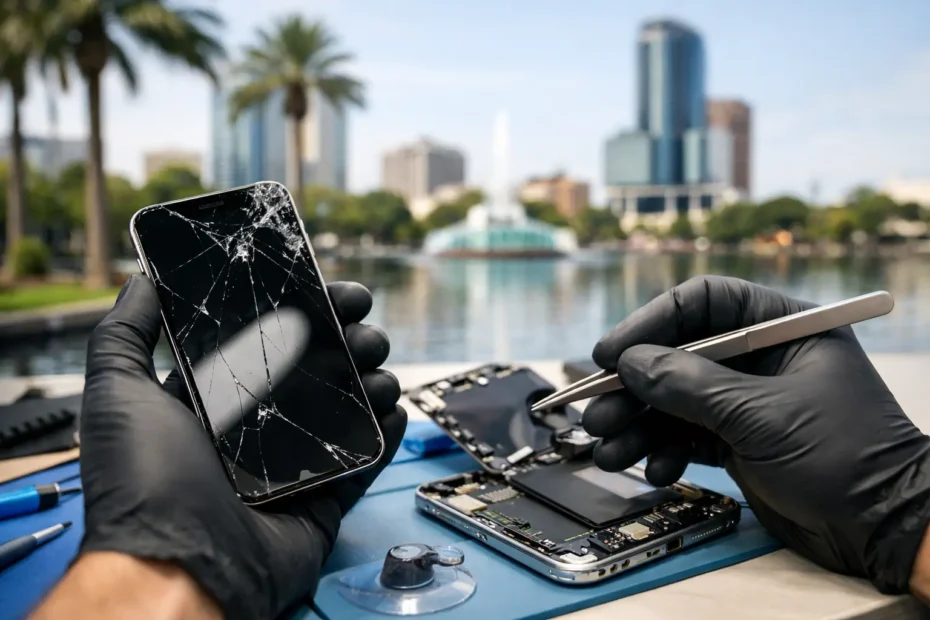
A cracked display on a brand-new phone is frustrating for one simple reason – the iPhone 16 is too expensive to treat like a throwaway device. If you are searching for iphone 16 screen repair Orlando FL, you probably do not want a lecture. You want to know what a proper repair looks like, what can go wrong with a cheap one, and how to get your phone back in working order without wasting time or money.
That starts with understanding that not all screen repairs are equal. Two shops can both advertise iPhone screen replacement, but the result can be very different depending on the part quality, the technician’s experience, and whether the repair process protects the rest of the phone.
What actually counts as screen damage
Most people think of screen repair as fixing cracked glass. Sometimes that is all it is. The top glass breaks, but the image still looks normal and touch still works. In other cases, the impact damages more than the surface. You may see black spots, green lines, dead areas in the touch layer, flickering, or a display that stays dark even though the phone still powers on.
That distinction matters because the symptom often tells you how severe the damage is. A simple crack with full function may still require a complete screen assembly replacement, but it usually means the phone did not suffer deeper internal damage. A blank display or erratic touch can point to a harder hit, and that raises the chance of frame damage, loose internal connectors, or board-level issues that a basic parts swap will not solve.
iPhone 16 screen repair in Orlando, FL: why quality matters
When people look for iPhone 16 screen repair in Orlando, FL, they usually compare price first. That makes sense, but screen repair is one of those services where the cheapest option can become the most expensive one.
Low-grade replacement screens often have weaker brightness, poor color accuracy, touch lag, and shorter lifespan. Some look acceptable on day one, then start showing problems after a few weeks of normal use. Others drain battery faster or make the phone feel slightly off every time you unlock it, type, or scroll.
A good repair is not just about installing a new part. It is about making sure the screen sits correctly in the frame, the seals are handled properly, the internal components are not damaged during disassembly, and the phone is tested before it goes back in your hand. If the frame is bent from the drop, that should be addressed honestly. If there is hidden impact damage beyond the screen, you should hear that before the repair moves forward.
That kind of straight answer matters more than a flashy counter display or a rushed promise.
The trade-off between speed and doing it right
Everyone wants fast turnaround. That is reasonable, especially if your phone is your camera, wallet, GPS, work device, and backup office all at once. But fast repair only helps if it is also careful repair.
Some screen replacements are straightforward and can be done quickly. Others are not. If the housing is bent, screws are stripped, prior repair work was done poorly, or the phone took a hard enough hit to affect multiple components, the job may need more time. A trustworthy technician will tell you that.
There is a difference between efficient service and rushed service. Efficient service comes from experience. Rushed service comes from trying to move devices through a pipeline. If you have ever picked up a repaired phone with dust under the display, uneven fitment, or a front camera that suddenly looks worse, you already know the difference.
What to ask before approving a repair
If you are choosing between repair shops, ask direct questions and pay attention to the answers. You do not need a sales pitch. You need clarity.
Ask what kind of screen is being installed. Ask whether Face ID, front camera performance, touch sensitivity, and display quality will be checked after the repair. Ask whether the technician will inspect for frame damage or hidden internal issues before sealing the phone back up. Ask what happens if the phone has additional damage that only becomes obvious during the repair.
A serious repair shop should be able to answer those questions without getting vague. They should also be upfront about what they can guarantee and what depends on the condition of the device when it arrives.
Why some screen repairs fail early
Early failure usually comes down to one of three things: poor parts, poor installation, or damage that was never properly diagnosed.
A weak aftermarket screen can start showing touch issues, brightness inconsistency, or display artifacts soon after installation. Poor installation can put stress on connectors, misalign the screen, or leave the device vulnerable to dust and moisture. Missed diagnosis is the third problem, and it is common after hard drops. The screen may not have been the only part affected, but if nobody checks beyond the obvious crack, the phone can come back with lingering problems.
This is where technician skill matters. Experienced repair work is not just swapping parts. It is knowing when a symptom does not match a simple screen failure and slowing down long enough to verify the real cause.
Repair vs replacement: what makes sense?
With older phones, people often ask whether repair is even worth it. With an iPhone 16, the answer is usually yes, unless there is major secondary damage. Replacing a current-generation phone is expensive, and even with insurance, deductibles and delays can make repair the more practical choice.
That said, it depends on the full condition of the device. If the screen is cracked but everything else is fine, repair is usually the obvious path. If the phone was run over, dropped in water after the impact, or has frame and board damage, the conversation changes. A reliable shop should explain that honestly instead of pushing a repair that does not make financial sense.
Good advice is not always “fix it.” Sometimes good advice is “here is what is damaged, here is what it will cost, and here is whether that cost is justified.”
The value of direct technician communication
One thing people underestimate is how much smoother the repair process becomes when you can talk to the person actually doing the work. That is especially true when the phone has more than one issue or when you want a clear explanation before spending money.
A front desk can take notes. A specialist can tell you whether the crack looks isolated, whether the frame may be compromised, and whether your symptoms suggest a deeper problem. That kind of direct communication saves time and lowers the chance of misunderstanding.
For customers who care about transparency, that matters. It is the difference between being processed and being helped.
What Orlando customers should watch out for
In a market as busy as Orlando, you will find every kind of repair shop, from highly skilled specialists to stores built around volume and convenience. Convenience has value, but it should not be the only factor.
Watch for pricing that seems unrealistically low. Watch for shops that avoid saying what part quality they use. Watch for vague promises about “same as original” without any real explanation. And be careful with repair offers that sound simple even when your phone clearly took a serious hit.
A quality repair shop should be comfortable talking plainly about risks, limitations, and expected results. That level of honesty is usually a better sign than aggressive discounting.
Choosing a repair shop with the right mindset
The best repair businesses tend to share the same mindset: diagnose first, repair carefully, and do not pretend every device fits a simple script. That is the same approach customers value in specialized Apple service generally, because expensive devices deserve more than guesswork.
At YourMac.Repair, that repair-first philosophy is familiar. Customers dealing with damaged Apple hardware often want the same thing whether it is a Mac or an iPhone – a fair diagnosis, direct answers, strong technical work, and no pressure to replace a device before repair has been properly considered.
If your iPhone 16 screen is cracked, flickering, or no longer responding the way it should, the right next step is not just finding the nearest shop. It is finding someone who treats the repair like it matters, because on a device you rely on every day, it does.
Need Mac or iPhone repair in Winter Garden / Orlando?
YourMac.Repair — board-level Apple repair with honest diagnosis and fast turnaround. We say YES when Apple says NO.
- Mac Logic Board Repair — liquid damage specialist
- Mac Screen Repair
- Mac Battery Replacement
- Mac & PC Data Recovery
- iPhone Screen Repair — same-day service
📞 (407) 580-9965 · WhatsApp · 819 Marsh Reed Dr, Winter Garden, FL 34787