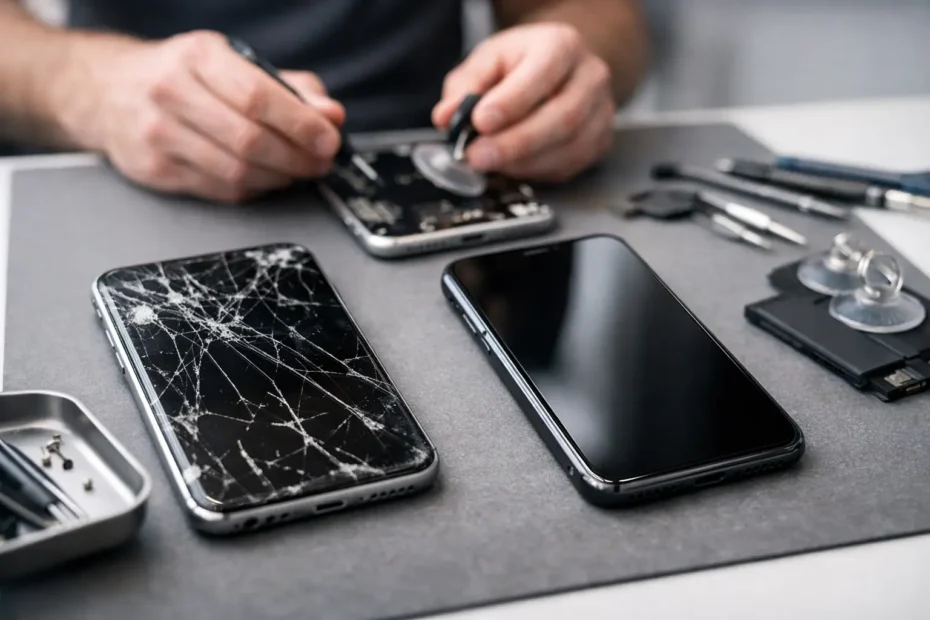
A cracked iPhone screen usually starts as an annoyance and turns into a bigger problem at the worst time. One drop, one spiderweb crack, and suddenly your phone is hard to read, hard to trust, and risky to keep using. If you are looking into iphone screen repair, the real question is not just price. It is whether the damage is limited to the glass, affecting the display underneath, or starting to create other issues that will cost more if you wait.
What iphone screen repair actually means
People use the phrase “screen repair” to describe a few very different problems. Sometimes the top glass is cracked but the image still looks normal and touch still works. Sometimes the OLED or LCD underneath is damaged, which can show up as black spots, green or white lines, flickering, discoloration, or a screen that stays dark even though the phone is on. In other cases, the display looks fine but touch response is erratic or completely dead.
Those differences matter because repair options, parts cost, and long-term reliability all depend on what failed. A phone with only cosmetic glass damage is one situation. A phone with display damage after impact may also have frame distortion, Face ID issues, housing damage, or internal board stress. Good repair work starts with diagnosis, not guessing.
When a cracked screen is more urgent than it looks
A lot of people keep using their phone after cracking the front glass. That is understandable, especially if the phone still turns on and responds normally. But a damaged screen can get worse quickly.
Small cracks let in dust, moisture, skin oils, and pocket debris. Once that happens, a screen that was merely cracked can start showing touch issues, pressure spots, or full display failure. Sharp edges are another obvious problem, but the less visible concern is what impact damage may have done inside the phone. A hard drop does not always stop at the glass.
If your iPhone has screen damage and also gets hot, restarts randomly, loses brightness, or has a camera or Face ID issue after the same drop, that is a sign the repair should not be treated as a simple glass swap.
Signs you need iphone screen repair now
Some symptoms leave little room for delay. If the screen is separating from the frame, flashing, showing ink-like black blotches, or has dead touch zones, the device should be checked soon. The same goes for green lines, ghost touching, or a display that only works when you press in a certain spot.
Water exposure changes the timeline. If the front glass is cracked and the phone gets wet, even briefly, the risk goes up fast. A phone that might have needed only a display replacement can turn into a corrosion and data recovery case if moisture reaches the internals.
Battery swelling is another issue that gets mistaken for screen failure. If the display is lifting up from one side, the problem may not be impact damage at all. It may be a swollen battery pushing the screen upward. That needs proper inspection right away.
Not all screen replacements are the same
This is where many people get burned. Two shops may both advertise screen replacement, but the part quality and repair standard can be very different.
A low-cost aftermarket screen may get the phone working again, but it can come with trade-offs. Brightness may be lower. Color accuracy may look off. Touch may feel less responsive. Battery drain can increase. In some cases, durability is worse, and the screen is more likely to fail after normal use or a minor drop.
Higher-quality replacement options usually cost more, but they tend to preserve the experience people expect from an iPhone. That includes better brightness, truer color, smoother touch response, and a more solid fit in the frame. For customers who use their phone for work, navigation, photos, scheduling, or constant messaging, that difference is not minor.
There is also the question of how the repair is performed. A careful technician checks the frame for bends, tests touch and image quality before sealing the phone, and makes sure the device is reassembled properly. Rushed work can leave gaps, weak adhesive, misaligned screens, or missing functionality.
The hidden damage that can change the repair
A drop that cracks the display can also damage the housing, front sensor assembly, earpiece area, or board-level connections. This is one reason honest diagnosis matters. If a shop quotes a flat screen price before inspecting the phone, you may not be getting the full picture.
For example, if the phone has no image after a drop, that does not always mean the screen alone is bad. It could be a board issue, connector damage, or a backlight-related failure depending on the model and the nature of the impact. Replacing parts without confirming the root cause can waste time and money.
This is where working with a repair specialist makes a difference. Shops with deeper diagnostic ability can tell the difference between a straightforward screen job and a more complex repair path. That matters if you want the phone fixed correctly the first time.
Should you repair the screen or replace the phone?
It depends on the model, the overall condition, and what the phone means to you. If the iPhone is otherwise working well and still meets your needs, screen repair is often the smarter move. It is usually faster and more cost-effective than replacing the phone, restoring apps, redoing settings, and dealing with data transfer headaches.
If the phone is older and has multiple issues – poor battery health, camera problems, charging issues, and heavy frame damage – then the value calculation changes. At that point, the screen may be only one part of a larger decision.
For many people, though, repair makes sense simply because the phone already holds their work, photos, messages, notes, and authentication apps. Replacing a device sounds simple until you have to rebuild your digital life under pressure.
What to ask before approving a repair
A good shop should be able to explain what failed, what part quality they use, and whether they see signs of additional damage. If they cannot answer those basics clearly, that is a red flag.
Ask whether the touch function, brightness, sensors, and fit are tested after installation. Ask if the frame needs correction before the new screen goes on. Ask what happens if the phone has hidden issues from the drop. None of that is being difficult. It is being careful with a device you depend on every day.
You should also expect straightforward pricing. Honest repair shops do not hide behind vague language. If a repair may change based on inspection, they should tell you that upfront and explain why.
Why repair quality matters more than speed alone
Fast turnaround is valuable, especially when your phone is tied to work and daily communication. But speed without precision is expensive. A poorly installed screen can fail early, sit unevenly in the frame, or create new problems that were not there before.
The best repair experience is fast and accurate. That means proper diagnosis, quality parts, careful installation, and clear communication. It also means being told when a screen repair is not the whole story.
That service approach is why specialist shops stand out. At YourMac.Repair, even though the company is known for advanced Mac repair and board-level diagnostics, that same repair-first mindset matters whenever a device needs real troubleshooting instead of a generic parts swap. Customers benefit when the person evaluating the device understands failure patterns, not just replacement steps.
After iphone screen repair, how do you protect the phone?
A quality screen protector helps, but it is not magic. It can reduce surface scratching and absorb some minor impact, but it will not guarantee survival on a hard corner drop. A case with decent edge protection matters more than many people think, especially on phones with previous frame impact.
If your phone was dropped once already, pay attention to the frame. Even a slight bend can make future screen damage more likely. A new screen installed on a distorted housing is more vulnerable than one sitting on a clean, true frame.
It is also smart to back up the phone as soon as possible if the screen is failing. If touch starts going in and out, delay can turn a repairable inconvenience into a data access problem.
The practical way to think about iphone screen repair is this: the crack you can see is only part of the decision. The better question is whether the phone has limited display damage or signs of deeper impact. When you get a clear diagnosis and a repair done properly, you are not just fixing glass. You are protecting the device you rely on every day.
Need Mac or iPhone repair in Winter Garden / Orlando?
YourMac.Repair — board-level Apple repair with honest diagnosis and fast turnaround. We say YES when Apple says NO.
- Mac Logic Board Repair — liquid damage specialist
- Mac Screen Repair
- Mac Battery Replacement
- Mac & PC Data Recovery
- iPhone Screen Repair — same-day service
📞 (407) 580-9965 · WhatsApp · 819 Marsh Reed Dr, Winter Garden, FL 34787