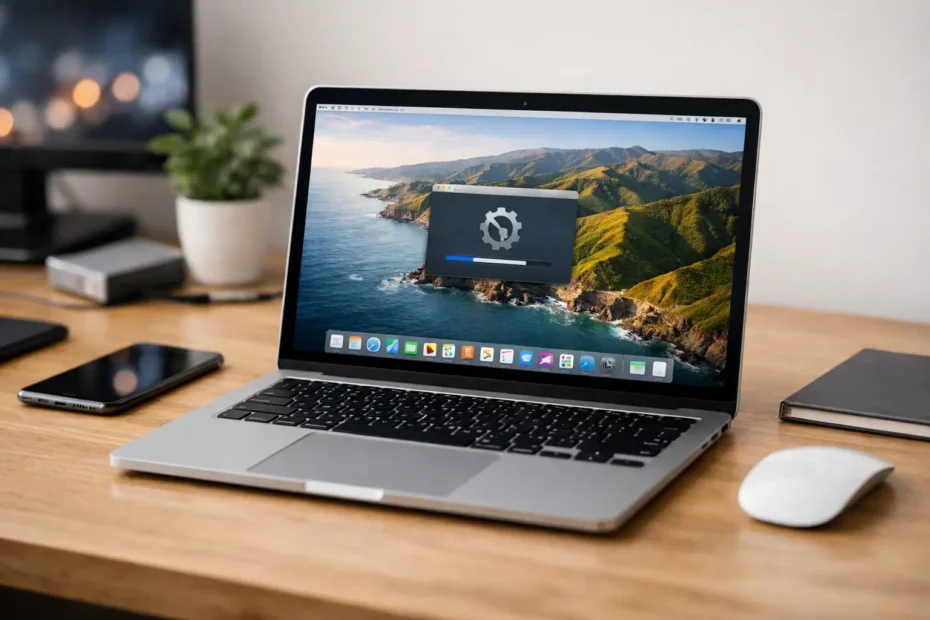
A 2015 MacBook Pro that still has a sharp display, a good keyboard, and plenty of life left should not become e-waste because Apple stopped offering the newest macOS. That is why a macOS Sonoma patcher review matters. The right patcher can extend the useful life of an older Mac by years. The wrong installation, or a rushed one, can leave you with missing Wi-Fi, unreliable graphics, a failed update, or files you did not back up first.
For most unsupported Mac upgrades, the tool people mean is OpenCore Legacy Patcher, often called OCLP. It is a serious community-built project, not a simple one-click upgrade button. It can make macOS Sonoma run on many Intel Macs that Apple no longer supports, but whether it is a good idea depends on the exact model, its hardware condition, and what you need the computer to do every day.
What a macOS Sonoma patcher actually does
Apple limits each macOS release to a list of supported Mac models. Those limits are partly about performance, but they are also tied to drivers, security features, graphics support, and Apple’s ability to test a growing number of older hardware configurations.
A Sonoma patcher works around that support cutoff. OpenCore Legacy Patcher prepares a boot environment that allows an unsupported Mac to install and start Sonoma. After installation, it may apply post-install patches for older graphics hardware, Wi-Fi cards, USB devices, and other components that Sonoma no longer supports out of the box.
That distinction matters. Installing Sonoma is only the first step. A Mac can reach the desktop and still have problems with graphics acceleration, sleep, Bluetooth, camera access, external displays, or wireless networking. A proper upgrade includes testing the machine after the patching process, not just celebrating when the progress bar finishes.
macOS Sonoma patcher review: the real benefits
The strongest reason to use a patcher is practical: it can keep a capable Mac useful. Sonoma brings newer Safari features, improved security updates during its supported period, current app compatibility, and a more modern user experience than older versions such as Monterey or Big Sur.
For a customer with a 2013 Mac Pro, a 2015 iMac with an SSD, or a 2017 MacBook Air used for email, documents, browsing, and schoolwork, Sonoma can be a meaningful improvement. Many current applications increasingly require newer macOS versions. An unsupported upgrade may be the difference between continuing to use the Mac productively and replacing it before the hardware has actually failed.
There is also a cost advantage. A clean older Mac with a healthy battery or power supply, sufficient memory, and a fast SSD can still handle everyday work very well. Spending on a careful upgrade and maintenance service is often more reasonable than replacing a machine that otherwise meets your needs.
For technically experienced users, OCLP also provides a level of control that Apple’s standard installer does not. You can create a bootable installer, preserve a known-working setup, and decide when to apply updates instead of accepting changes blindly.
The trade-offs are real
A patched Sonoma installation is not equivalent to official Apple support. The patcher community does excellent work, but Apple did not design Sonoma around every unsupported Mac. The older the hardware, the more cautious you should be.
Graphics are the biggest deciding factor. Some older Metal-capable GPUs work well after root patches. Other graphics configurations can have reduced performance, visual glitches, wake-from-sleep issues, or trouble with video editing and external displays. If you depend on Final Cut Pro, Adobe applications, CAD software, music production tools, or a color-critical display setup, testing is not optional.
Wireless hardware can also complicate the picture. Older Broadcom Wi-Fi cards may require patches. In some cases, continuity features, AirDrop behavior, Bluetooth accessories, or newer security requirements can be less predictable than they are on a natively supported Mac.
Then there is the update issue. Sonoma updates can change system files that the patcher relies on. Major point updates may require you to reinstall patches after updating. That is manageable for someone comfortable with recovery tools and boot settings, but it can be stressful if the Mac is needed for a business deadline the next morning.
A patcher cannot repair failing hardware. If a Mac has random shutdowns, liquid damage, overheating, an unstable SSD, battery swelling, a failing graphics chip, or a damaged logic board, upgrading the operating system may expose the problem more often. It will not fix it.
Which Macs are good candidates?
The best candidates are usually Intel Macs from the mid-2010s that have solid hardware, an SSD, and enough memory for the workload. A 2015 or 2017-era Mac with 8GB of RAM can run Sonoma for lighter tasks, although 16GB is much more comfortable for multitasking. An SSD is close to essential. Installing Sonoma on a mechanical hard drive usually results in a slow, frustrating experience, patched or not.
Desktop Macs often make better candidates because they can have more memory, better cooling, and easier SSD upgrades. A well-maintained iMac or Mac mini can be an excellent Sonoma machine for home office work, web apps, and general productivity.
Older MacBooks require a more individual assessment. Battery health, keyboard condition, heat, charging behavior, and SSD condition matter as much as model year. A laptop that only lasts 45 minutes on battery or runs hot under light use may need repair and maintenance before a software upgrade makes sense.
There are also situations where staying on a supported older macOS is the smarter choice. If a Mac is stable on Monterey and runs a specific older printer, scanner, accounting program, music interface, or business application, Sonoma may create more disruption than value. Newer is not always better when reliability is the priority.
What to do before installing Sonoma
Do not start with the patcher. Start with the data. Make a complete backup that you can verify, not just a copy of a few folders. A backup should include your user files, photos, mail, passwords or recovery keys, and any business-critical application data.
Next, check the Mac’s basic health. Confirm that the internal drive is not reporting errors, the battery is safe, the machine is not overheating, and there are no existing Wi-Fi, Bluetooth, display, or sleep problems. Sonoma cannot be evaluated fairly on a Mac that was already unstable.
You should also review your essential software. Check whether your office suite, cloud storage service, printer, scanner, VPN, security software, audio interface, and specialty apps support Sonoma. For many people, the application check is more valuable than reading a generic compatibility list.
Finally, plan for recovery. Keep a working installer available and know how you will return to the previous system if something does not work as expected. This is especially useful for users who rely on their Mac for work or school.
Performance and day-to-day reliability
On the right hardware, Sonoma can feel surprisingly good. A clean install on an SSD-equipped iMac or MacBook Pro often feels faster than an older, cluttered operating system installation. Safari, email, documents, streaming, video calls, and normal multitasking can be perfectly usable.
But patched Sonoma does place more demand on older machines. Background indexing, memory pressure, browser tabs, modern websites, and video conferencing can reveal the limits of 8GB RAM and aging processors. A machine may boot Sonoma successfully but still be a poor fit for a heavy professional workload.
Expect the first day or two to be busier than normal while the Mac indexes files, syncs cloud content, and rebuilds caches. After that, evaluate it based on your actual routine: external monitor use, printer access, sleep and wake, Wi-Fi stability, video calls, and the applications that make the Mac valuable to you.
When professional help is worth it
A patched macOS upgrade is reasonable as a do-it-yourself project for a technically confident owner with a current backup and time to troubleshoot. It is less reasonable when the Mac contains irreplaceable files, supports a small business, or already has hardware symptoms that need diagnosis.
At YourMac.Repair, the best approach is to evaluate the machine before changing the operating system. That may mean checking SSD health, replacing a weak battery, cleaning dust from the cooling system, refreshing thermal compound, addressing a logic board issue, or determining that Sonoma is not the right target for that particular Mac. The goal is not to install the newest version at any cost. It is to leave you with a Mac that is dependable after the work is done.
A macOS Sonoma patcher can be an excellent way to extend an older Mac’s life, especially when the hardware is healthy and expectations are realistic. Treat it as a carefully planned upgrade rather than a shortcut, and your older Mac may have far more useful service left than its official support date suggests.
Need Mac or iPhone repair in Winter Garden / Orlando?
YourMac.Repair — board-level Apple repair with honest diagnosis and fast turnaround. We say YES when Apple says NO.
- Mac Logic Board Repair — liquid damage specialist
- Mac Screen Repair
- Mac Battery Replacement
- Mac & PC Data Recovery
- iPhone Screen Repair — same-day service
📞 (407) 580-9965 · WhatsApp · 819 Marsh Reed Dr, Winter Garden, FL 34787